
Plant Health & Pest Control
Treating plant disease and controlling palm weevil and pests with licensed products.
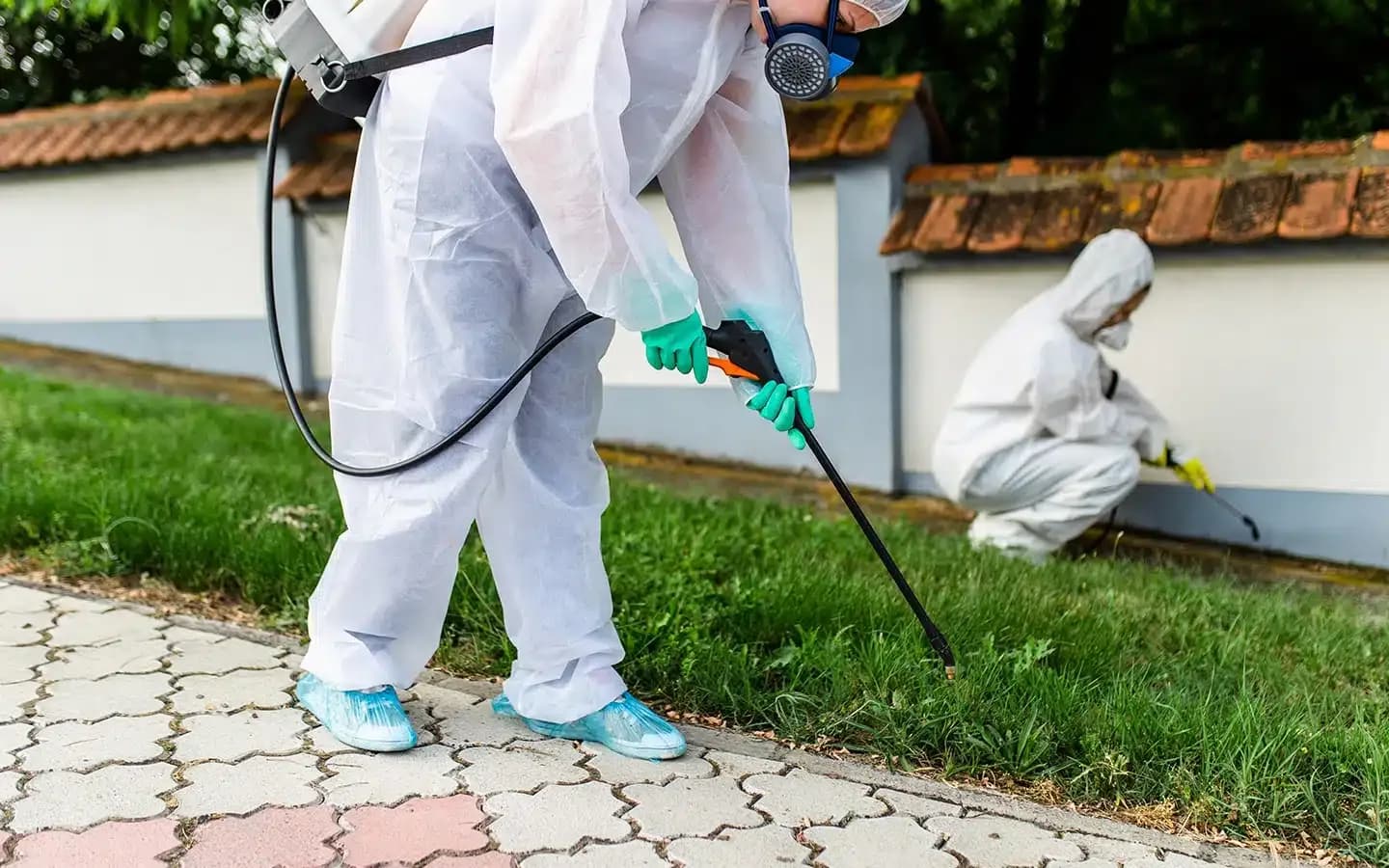
Red palm weevil is the most serious threat to palms in the UAE, and early detection is the difference between treatment and removal. We carry out periodic inspection and preventive treatment, and handle soil disease, fungal issues and insects with licensed products at doses that are safe around children and pets after the stated re-entry period.
The same symptom has four different causes
Yellowing leaves is the most common complaint and one of the least diagnostic symptoms. It can be:
- Overwatering — roots suffocate, so the plant looks thirsty.
- Nutrient deficiency — iron or nitrogen, each with a different yellowing pattern.
- Salinity — accumulated salts blocking water uptake.
- A root pest — damage below ground, symptoms above it.
Spraying without diagnosis treats one of the four by chance. And the time lost to trial and error is time the plant spends declining.
Red palm weevil: what you see is already late
This is the most serious palm pest in the UAE. Larvae consume the palm from inside — so by the time symptoms show on the fronds, or a hole or fermentation odour appears, internal damage is usually extensive.
That is why effective management depends on early periodic inspection rather than responding to symptoms. Valuable and mature palms in particular deserve a regular inspection schedule.
Pesticide is the last step, not the first
Integrated management orders the options: first adjust predisposing conditions (irrigation, airflow, overcrowding), then mechanically remove affected parts, then biological control, and finally chemical treatment at a defined dose.
Starting with pesticide kills the pest temporarily and kills its natural enemies with it — so the next infestation arrives faster and harder, because the balance has been broken.
Re-entry interval is not a detail
Approved products have a defined period after application that must pass before the area is used. In a garden with children or pets, that is not optional information — we write it explicitly in the report with the safe return time.
Recurrence means the cause is still there
If a pest returns after successful treatment, the problem is not the treatment — it is the condition that attracted the pest originally: excess moisture from incorrect irrigation, crowded planting blocking airflow, or a plant weakened by poor soil. Without removing the cause, every treatment is a postponement.
Scope of work
- Diagnosis before spraying — similar symptoms have different causes
- Integrated management that starts with prevention, not with pesticide
- Approved products at correct doses with clear re-entry intervals
- Red palm weevil managed by early detection, not after collapse
- Nutrient deficiency treated by analysis, not by guessing leaf colour
- A report covering condition, treatment and follow-up date
How we deliver
Inspection and diagnosis
Examine the plant and identify the problem: pest, disease, nutrient deficiency, or irrigation fault. All four produce similar symptoms and require completely different remedies.
Treatment plan
Define the appropriate treatment, dose and repeat interval, with preventive measures that stop recurrence.
Application
Apply with suitable equipment at the right time of day — spraying in peak heat reduces effectiveness.
Follow-up
A return visit to assess response and adjust the plan if needed.
Frequently asked
Leaves are yellowing — what is the cause?
How serious is red palm weevil?
Are pesticides safe around children and pets?
Is control possible without pesticides?
Why does the pest come back?
When is a soil test needed?
In the same category
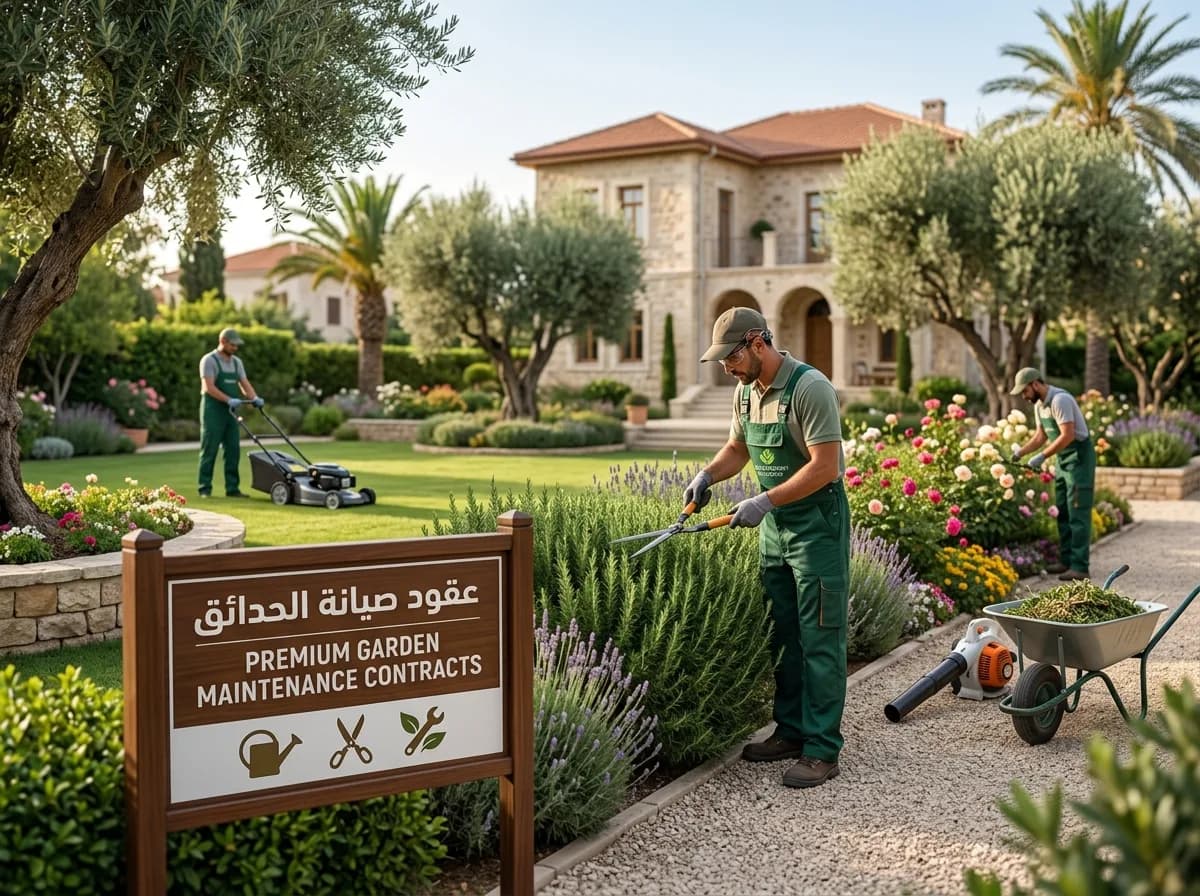
Garden Maintenance Contracts
Scheduled visits: mowing, pruning, feeding, an irrigation check, and a report after each one.
Pay in instalments with

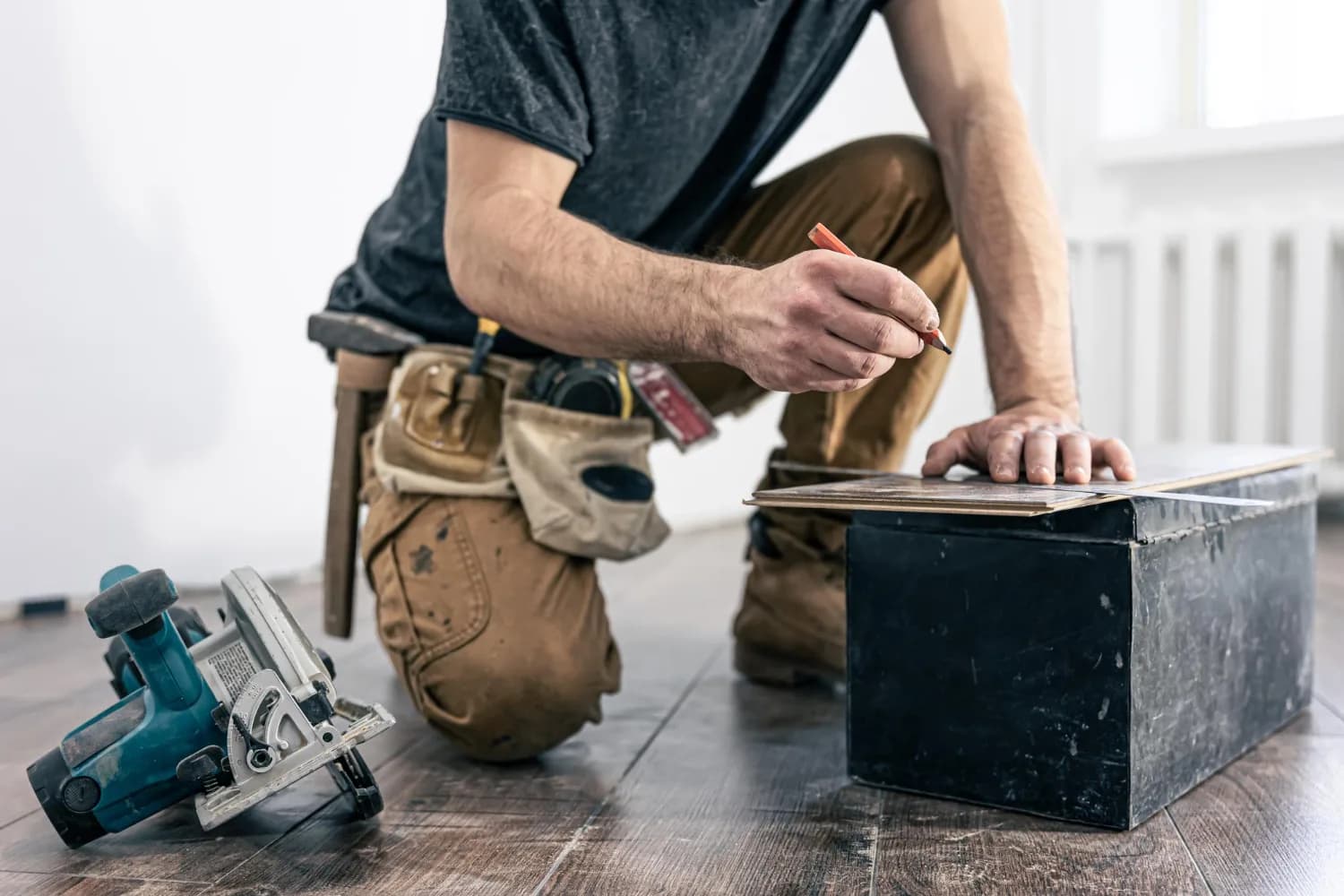
Building & Facility Maintenance
Periodic maintenance contracts for villas and facilities: preventive checks, repairs and a report.
Pay in instalments with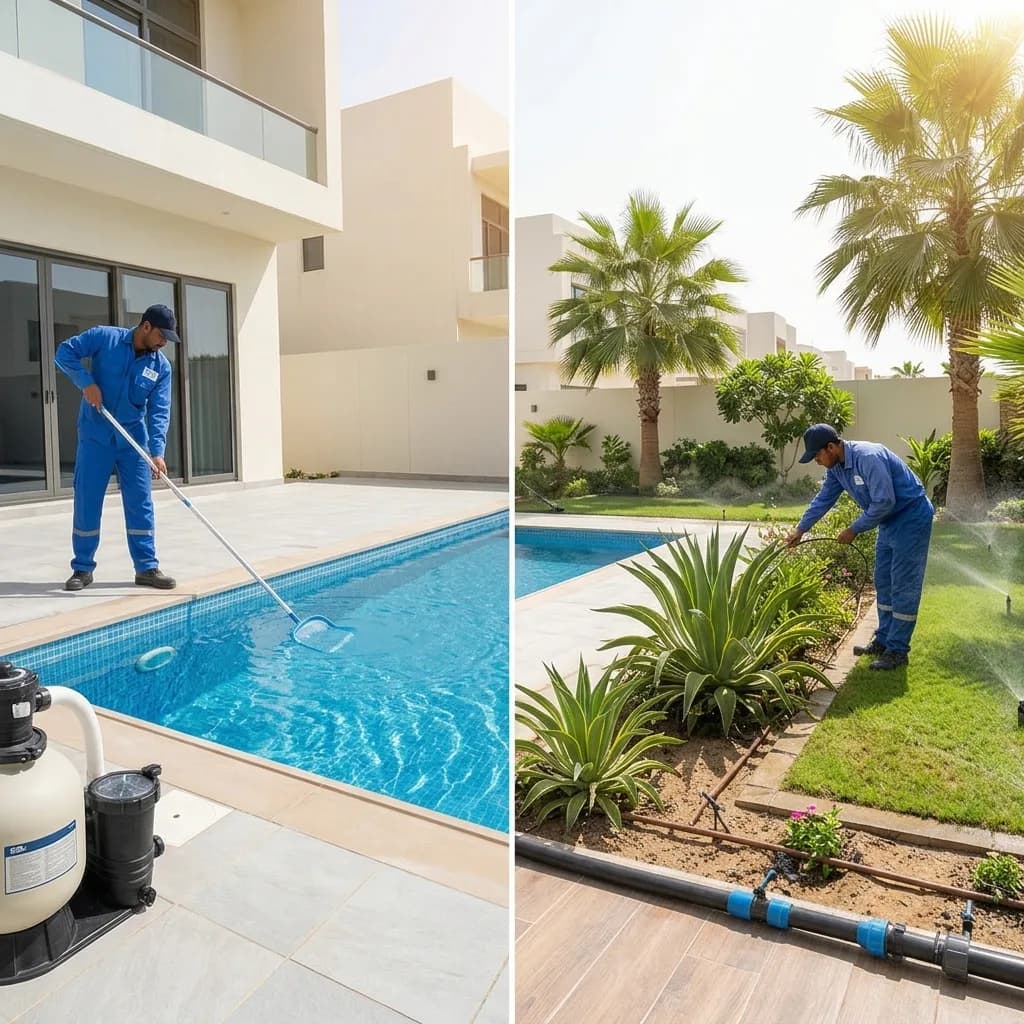
Pool & Irrigation Maintenance
Pool cleaning and chemical balancing, plus periodic irrigation checks and repairs.
Pay in instalments withReady to start your project?
A free site visit anywhere in the UAE within 48 hours — no obligation.