
Bathroom Renovation
A full refit with new waterproofing, plumbing and finishes — the most leak-prone room in the house.
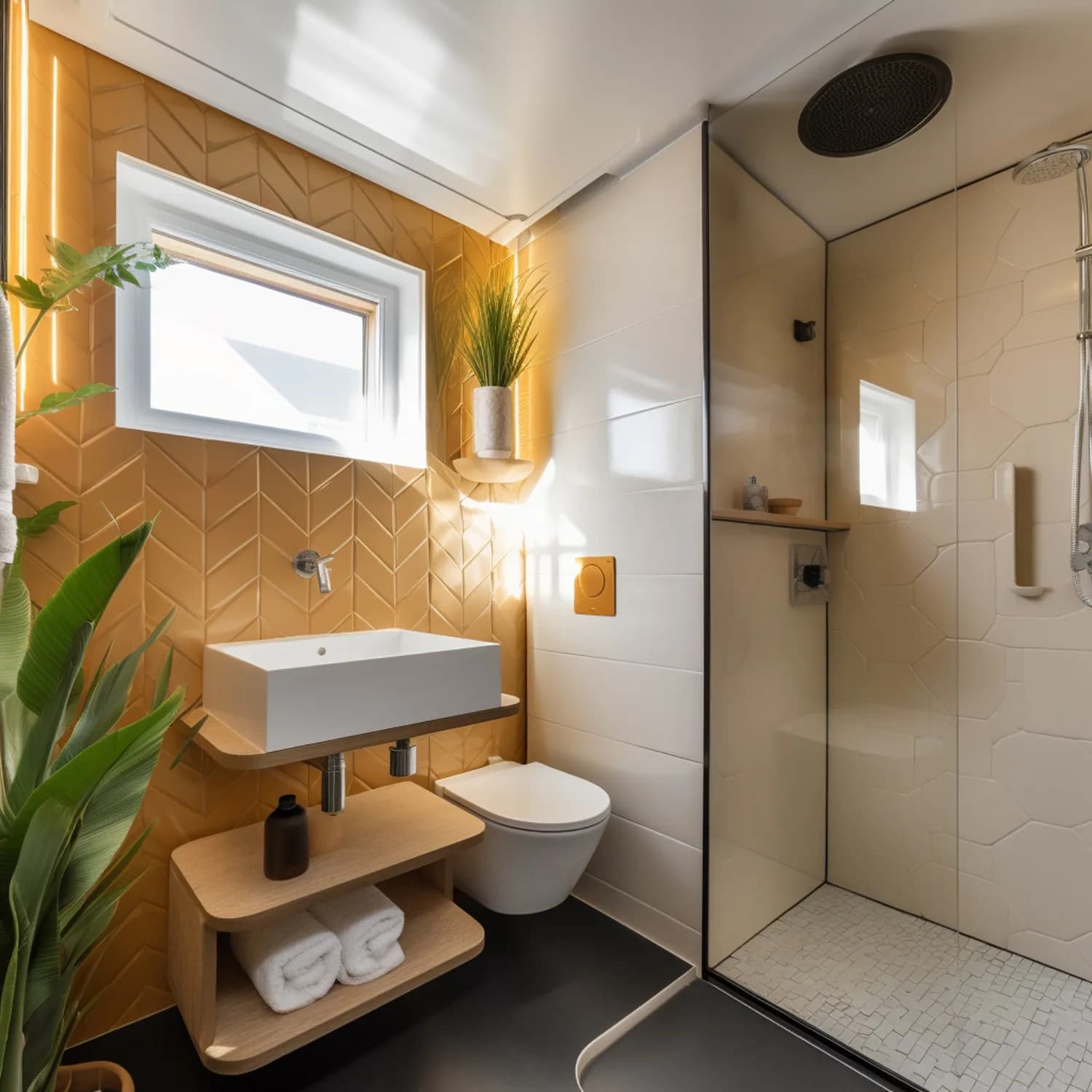
The bathroom causes more problems than any other room, and the cause is always the same: missing or badly executed waterproofing. We strip the old finish back to substrate and apply a new two-coat waterproofing system with a 24-hour flood test before tiling. That test is the difference between a bathroom that lasts ten years and one that leaks into the ceiling below within a year.
Tile is not a water barrier
This is the most overlooked point in bathroom renovation. Tile is a surface, and the joints between tiles — whatever the grout quality — allow water through gradually with daily use. The layer that actually stops water is the waterproof membrane beneath the tile.
A bathroom renovated with excellent tile and no membrane looks perfect for a year, then damp appears in the adjacent room or in the ceiling below — and repair then means demolishing the entire new bathroom.
Flood testing is the moment of truth
After waterproofing and before any tiling, the floor is sealed, filled with water and left for a sufficient period. Any defect — at the drain, at the floor-to-wall junction, or at a pipe penetration — reveals itself now.
That test takes time in the middle of the project, and it is the time usually cut when someone is in a hurry. Cutting it means the defect is discovered a year later beneath new tile.
Falls matter more than flatness
A perfectly level bathroom floor is wrong — water stands on it. What is needed is a gentle, consistent fall to the drain from every direction, with no flat areas that pool. Pooling is not cosmetic: it accelerates grout failure and leaves stains and deposits.
Large-format tile makes this harder because a large piece cannot flex — so the fall must be built in the layer beneath with greater precision.
Old pipework
In an old bathroom, pipes are usually corroded internally: pressure drops and water runs discoloured at first. Covering them with a new wall instead of replacing them means the first leak requires breaking open finishes just completed.
The extra cost of replacing now is far less than the cost of demolition later — a clear calculation, not an opinion.
Ventilation
A bathroom generates humidity every day. Without adequate ventilation, that humidity condenses on surfaces, producing mould and odours and shortening the life of paint and doors. A window suffices where natural ventilation is reasonable; otherwise mechanical extraction — and that is not a luxury in an internal bathroom with no window.
Scope of work
- Full waterproofing to floor and wet walls before any tiling
- Correct falls to the drain with no pooling areas
- Replacing supply and waste pipework rather than covering it
- Mechanical extraction or a window — trapped humidity destroys everything
- Floor tile with slip resistance suited to wet use
- Flood testing the waterproofing before tiling, not after
How we deliver
Strip-out and inspection
Remove old finishes and inspect pipework and waterproofing beneath. Most problems in old bathrooms reveal themselves at this moment.
Plumbing and drainage
Replace supply and waste pipework and set drainage levels before any waterproofing.
Waterproofing and testing
Waterproof the floor and wet walls, then flood test for long enough to be certain before tiling.
Tiling and fittings
Tile to correct falls, install sanitaryware, mixers and ventilation, then clean and hand over.
Frequently asked
Why does waterproofing matter more than tile?
Is flood testing necessary?
Where do damp and odours come from?
Can I just change the tiles?
How long does it take?
Are large tiles better?
In the same category
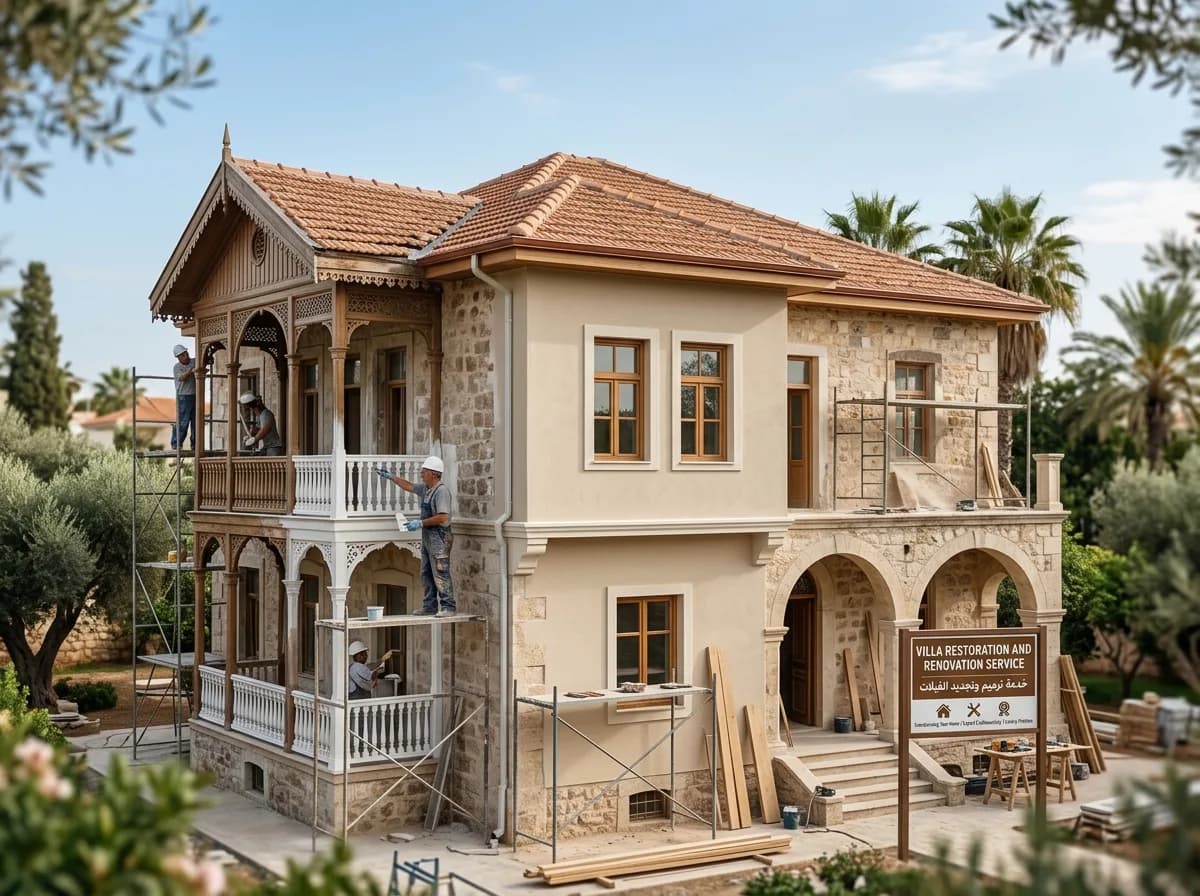
Villa Renovation
Full or partial villa renovation on a written schedule, with a weekly photo update.
Pay in instalments with

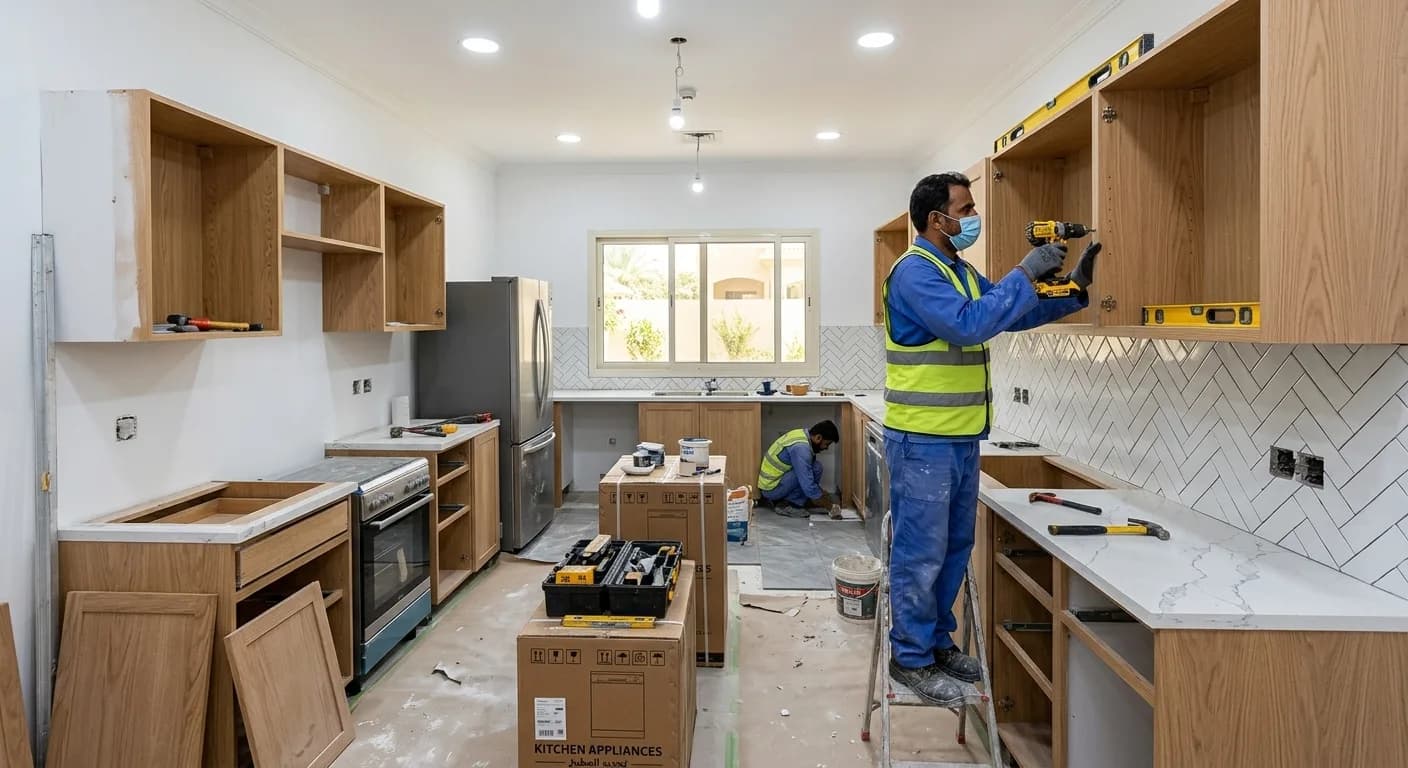
Kitchen Renovation
A kitchen refit with new cabinetry, worktops and revised services.
Pay in instalments with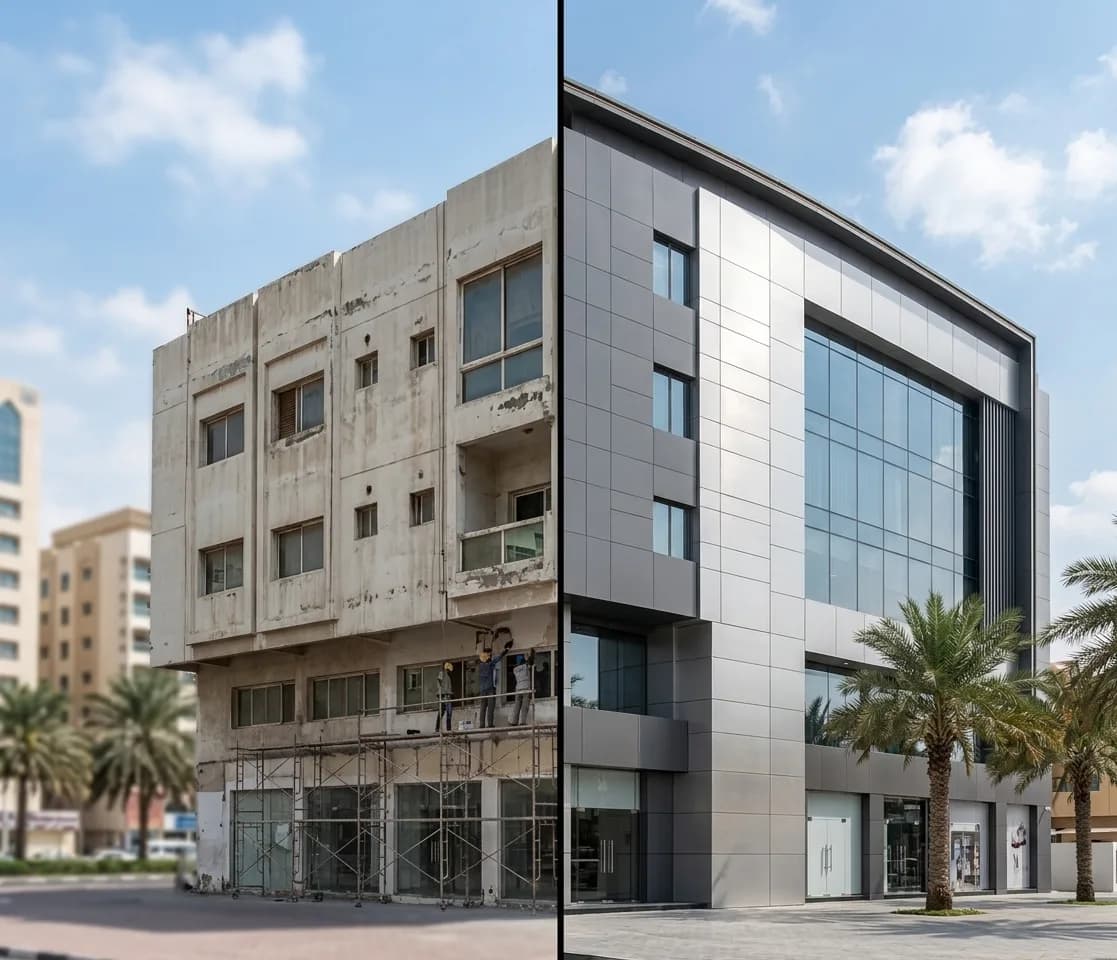
Façade & Cladding Refurbishment
Treating and renewing the façade in paint, stone or cladding — fixing the cause of decay, not the symptoms.
Pay in instalments withReady to start your project?
A free site visit anywhere in the UAE within 48 hours — no obligation.