
Kitchen Renovation
A kitchen refit with new cabinetry, worktops and revised services.
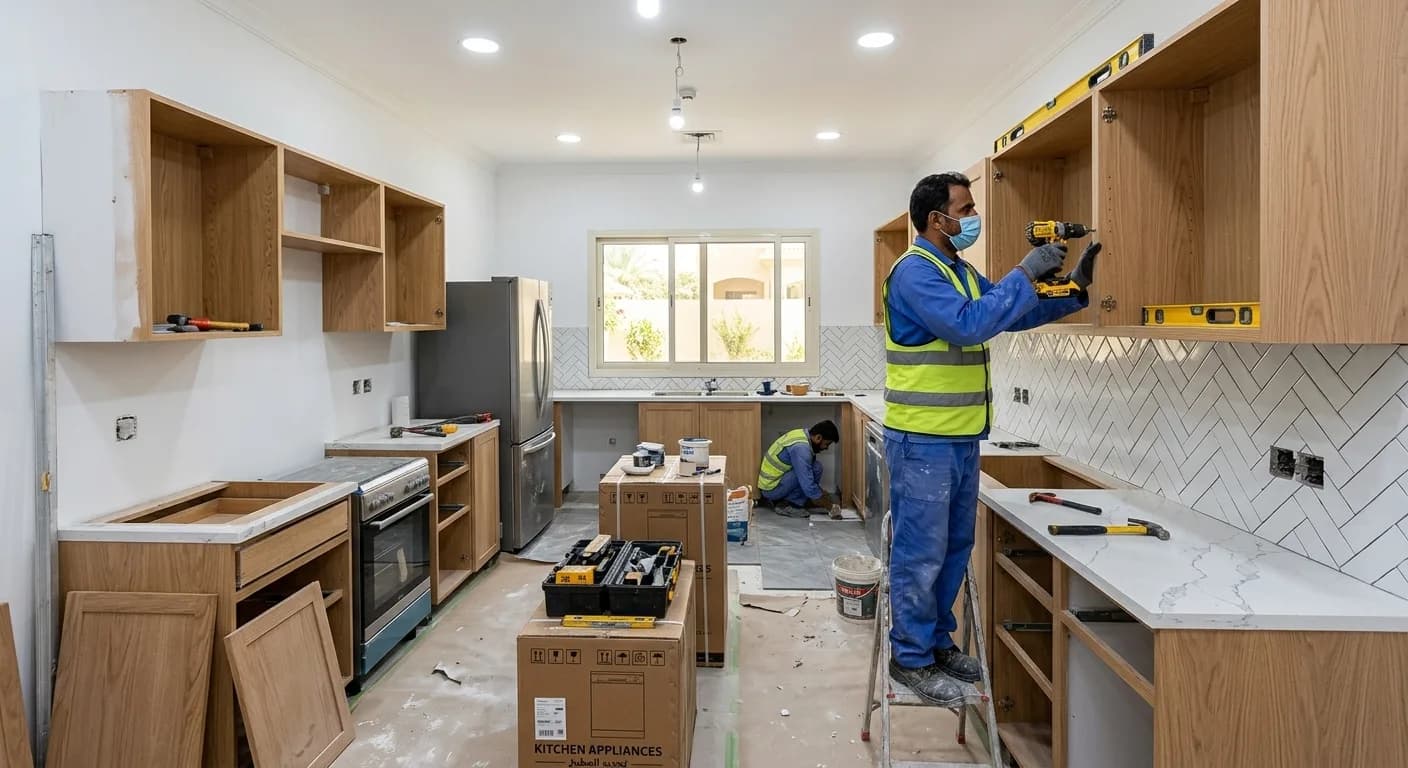
A kitchen refit is the chance to fix what is not visible: water lines, power points and extraction. We review all services before the new cabinetry goes in, because reaching them afterwards means taking that cabinetry back out. Worktops and units are specified against use and humidity, not just the catalogue.
Planning before appearance
A kitchen that looks excellent and is tiring to use always has a planning problem, not a materials problem. The distances between sink, hob and fridge — the work triangle — are crossed dozens of times in a single meal. When they are long, or interrupted by an island or a door, the kitchen is exhausting daily.
So the conversation starts with questions about cooking: do you cook daily or reheat? Do you cook alone or is more than one person in the kitchen? Do you need substantial dry storage or a little?
Base units live in a different environment from wall units
The unit under the sink is exposed to humidity and repeated small leaks. Wall units see steam and heat only. Using the same material for both is either overspending above, or a risk below.
Water-resistant materials in base units make a clear difference to lifespan — the first sign of the wrong material is swelling at the base of the sink unit.
The worktop follows how you cook
Granite is natural and heat resistant, but porous, so it needs periodic sealing to avoid absorbing stains. Quartz is less porous with better stain resistance and needs no sealing, but tolerates direct heat less well.
So a kitchen where hot pans land on the surface has a different answer from one where staining is the main concern. The choice is functional, not decorative.
Extraction: where savings are made and the result shows daily
Arabic cooking with oils, spices and frying produces far more grease and odour than light cooking, and needs higher extraction. Ducted extraction substantially outperforms recirculating filters — a filter captures some grease but returns heat and humidity to the kitchen.
Weak extraction leaves grease settling on units and odours lingering in the house, and that becomes apparent months after installation.
Services are fixed before manufacture
Sink position sets the waste, hob position sets gas and extraction, and appliance positions set power points. All of it must be locked before units go into manufacture — because changing it afterwards means either an ill-fitting unit or exposed pipework.
Scope of work
- Layout built on the work triangle: sink, hob and fridge
- Moisture-resistant materials in the base units specifically
- Worktops with stain and heat resistance matched to how you cook
- Extraction sized to kitchen volume and cooking style
- Under-cabinet lighting on the worktop, not overhead light alone
- Plumbing and electrical positions fixed before units are manufactured
How we deliver
Measure and understand use
Precise measurement, plus a conversation about cooking style, household size and storage needs. A kitchen that cooks daily is not a kitchen that reheats.
Layout and design
Arrange units around a comfortable work triangle, and fix plumbing, electrical and extraction positions before manufacture.
Services and preparation
Move or add water, waste and power points, and prepare walls and floor.
Installation and handover
Install units, worktops and appliances, adjust doors and drawers, then clean and hand over.
Frequently asked
Which material is best for units?
Granite or quartz?
How is extraction sized?
Can I change only the units?
How long does it take?
Is under-cabinet lighting necessary?
In the same category

Villa Renovation
Full or partial villa renovation on a written schedule, with a weekly photo update.
Pay in instalments with

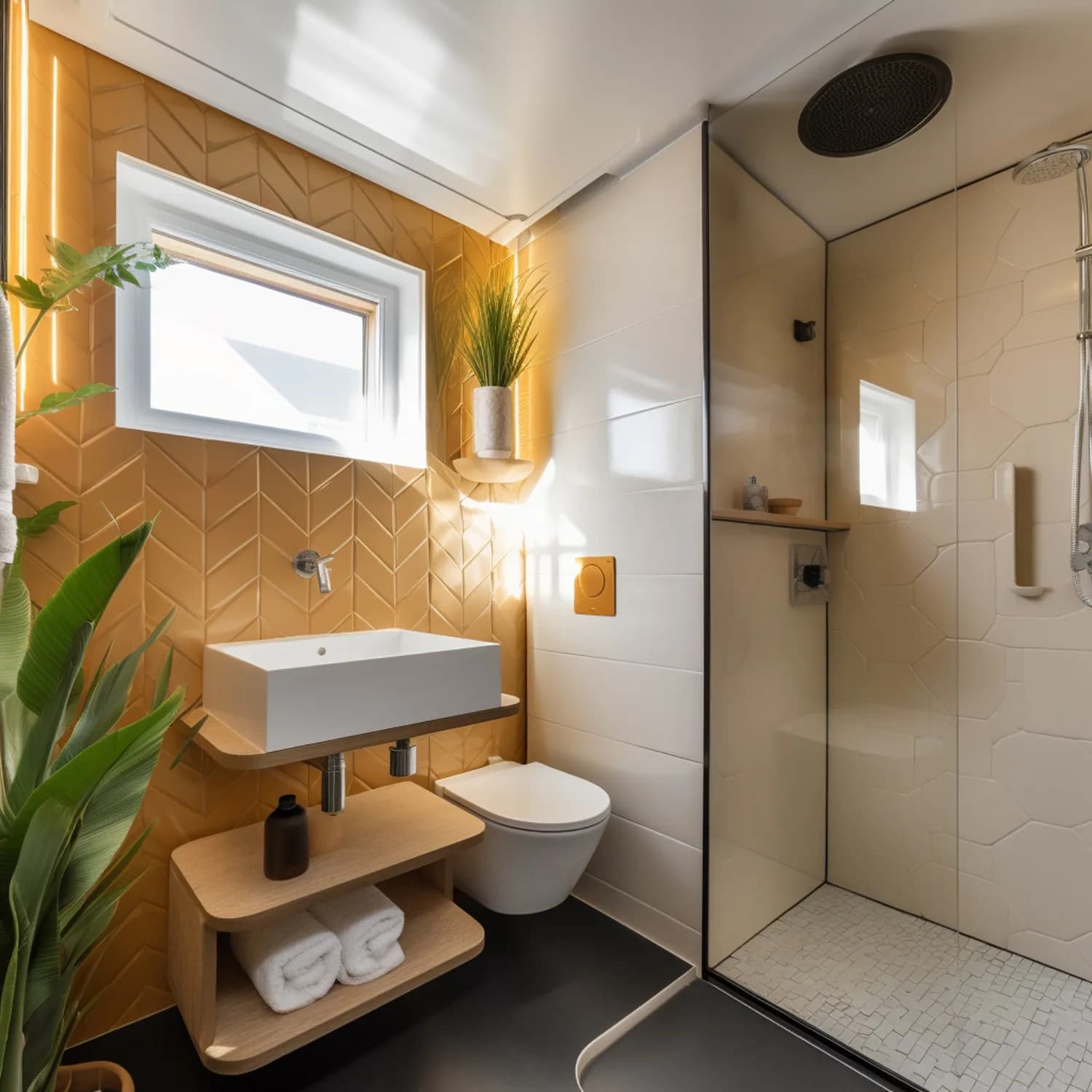
Bathroom Renovation
A full refit with new waterproofing, plumbing and finishes — the most leak-prone room in the house.
Pay in instalments with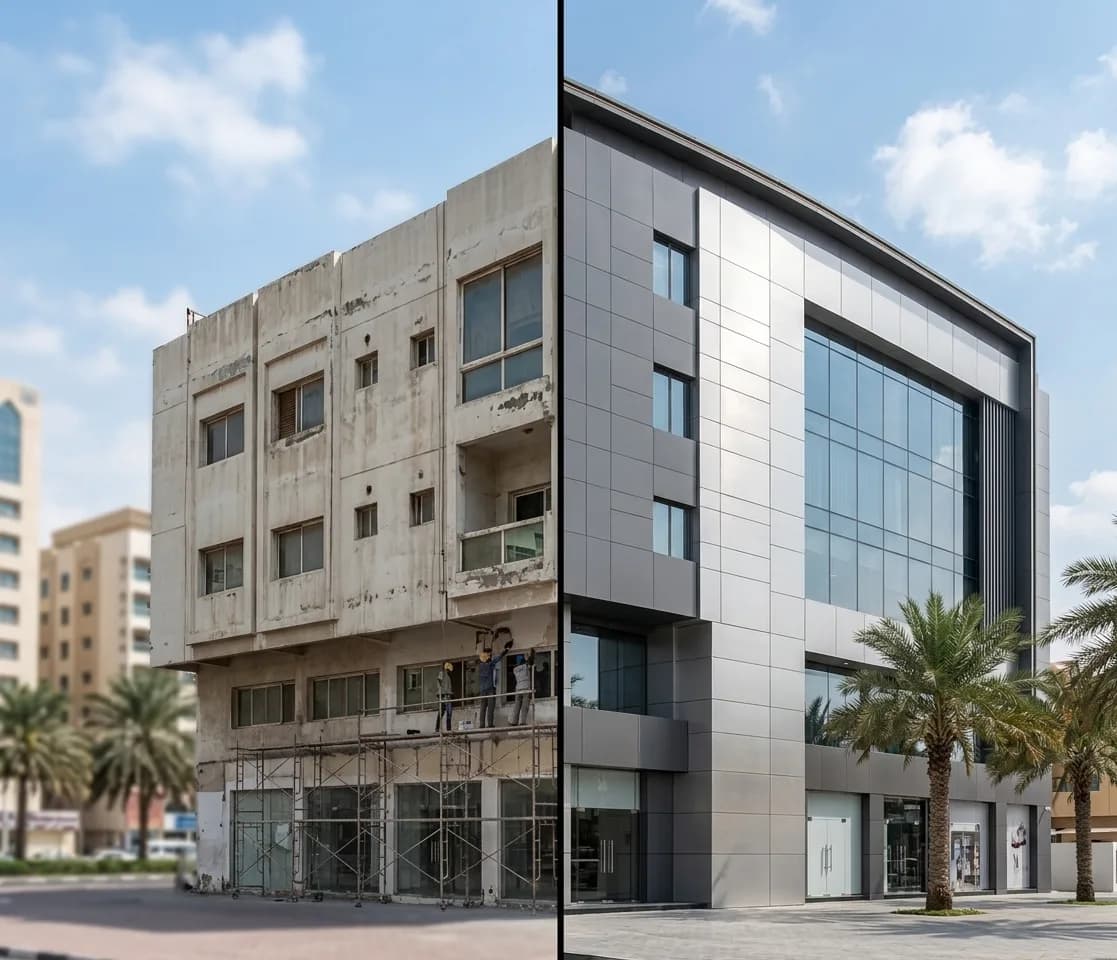
Façade & Cladding Refurbishment
Treating and renewing the façade in paint, stone or cladding — fixing the cause of decay, not the symptoms.
Pay in instalments withReady to start your project?
A free site visit anywhere in the UAE within 48 hours — no obligation.