
Façade & Cladding Refurbishment
Treating and renewing the façade in paint, stone or cladding — fixing the cause of decay, not the symptoms.
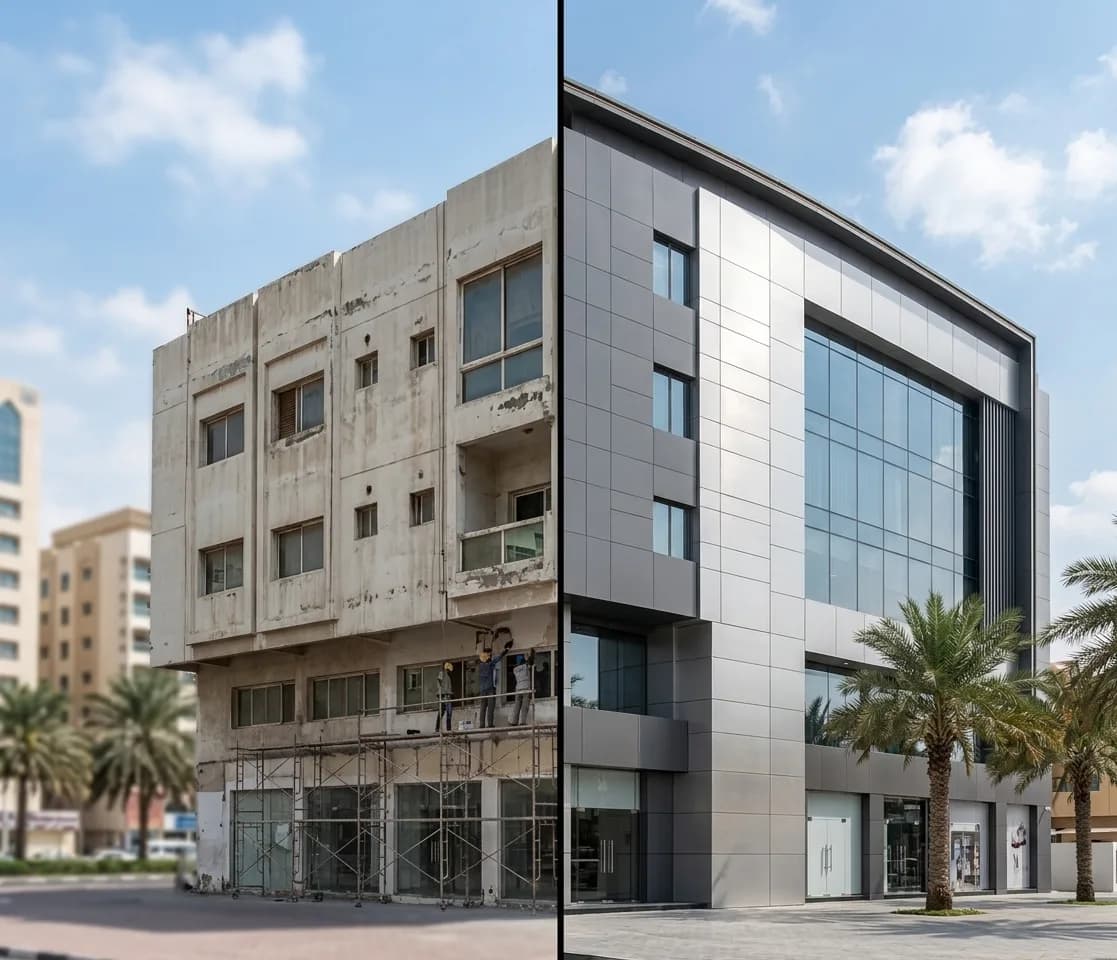
Peeling paint and cracked render are symptoms, not the problem. The cause is usually rising damp, weak waterproofing, or salts in the surface layer. We survey the façade and treat the cause first — damp treatment, crack repair, a blocking primer — and only then renew the finish. Paint over an untreated problem peels again within a year.
Cracking is a symptom — the question is its source
Before any discussion of cladding or paint, we need to know where the crack comes from. A hairline crack in render from shrinkage is one thing; an extended crack at a consistent angle from structural movement or settlement is something else entirely.
The first is resolved with surface repair and stays resolved. The second, if covered with cladding, keeps working beneath and later appears as distorted panels or loosened fixings. So the survey precedes the quotation rather than following it.
Cladding shades — insulation is what cools
A common confusion: people assume cladding itself reduces heat. Cladding does two things: it shades the wall from direct sun, and it creates a ventilated cavity that carries heat away. But what actually reduces heat transfer inward is the thermal insulation fitted behind it.
West and south-facing elevations benefit most, and the difference shows in air-conditioning demand. Cladding without insulation improves appearance and protects the wall, but its thermal effect is limited.
The ventilated cavity is not spare space
The gap between wall and cladding lets air move and rise out. That draws off accumulated heat, and more importantly lets any moisture that enters dry and escape. Cladding stuck directly to the wall without a cavity traps moisture and turns it into a hidden problem that degrades the wall slowly.
Fire rating is a requirement, not an option
UAE façade material requirements were tightened after previous incidents, and there are approved ratings for permitted materials. Cheap non-compliant material is not merely a violation — it is a genuine risk to an entire building.
We use compliantly rated materials and supply their certificates with the handover. Submission to the authority is by the owner or an approved consultant — we do not obtain permits.
Details at openings
A flat façade is easy. Problems occur at windows, corners, and top and bottom edges — the places where water finds a path inward. Detailing those with drainage paths and designed edges is what separates a façade that stays sound from one that leaks at a single point.
Scope of work
- Investigate the causes of cracking before any surface treatment
- Aluminium, HPL or stone cladding depending on building and budget
- Galvanised support framing with a ventilated cavity behind the cladding
- Thermal insulation behind the cladding that lowers the cooling load
- Materials with fire ratings matching UAE requirements
- Water paths and drainage detailed at openings and edges
How we deliver
Façade survey
Assess cracking, damp and render condition, and establish whether the problem is superficial or structural. Surface treatment of a structural problem returns within months.
Repair and preparation
Repair cracks, treat damp and prepare the surface to receive the support framing.
Framing and insulation
Install galvanised framing with a ventilated cavity, and fit thermal insulation behind the cladding.
Cladding and details
Install cladding panels and detail junctions at windows, edges and corners — the usual leak points.
Frequently asked
Do cracks return after repair?
Does cladding reduce heat?
What are the fire requirements?
Which cladding material is best?
Can cladding go on an old façade?
Why the ventilated cavity?
In the same category
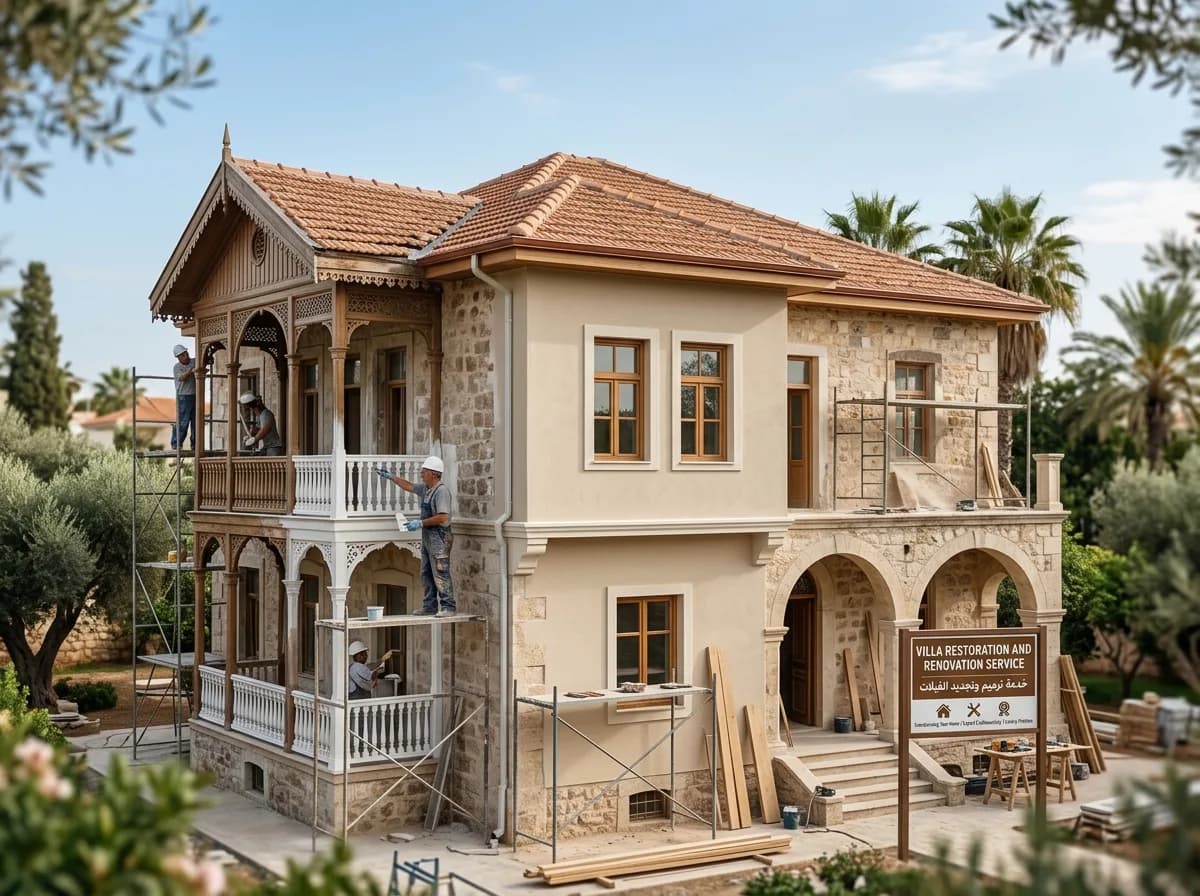
Villa Renovation
Full or partial villa renovation on a written schedule, with a weekly photo update.
Pay in instalments with

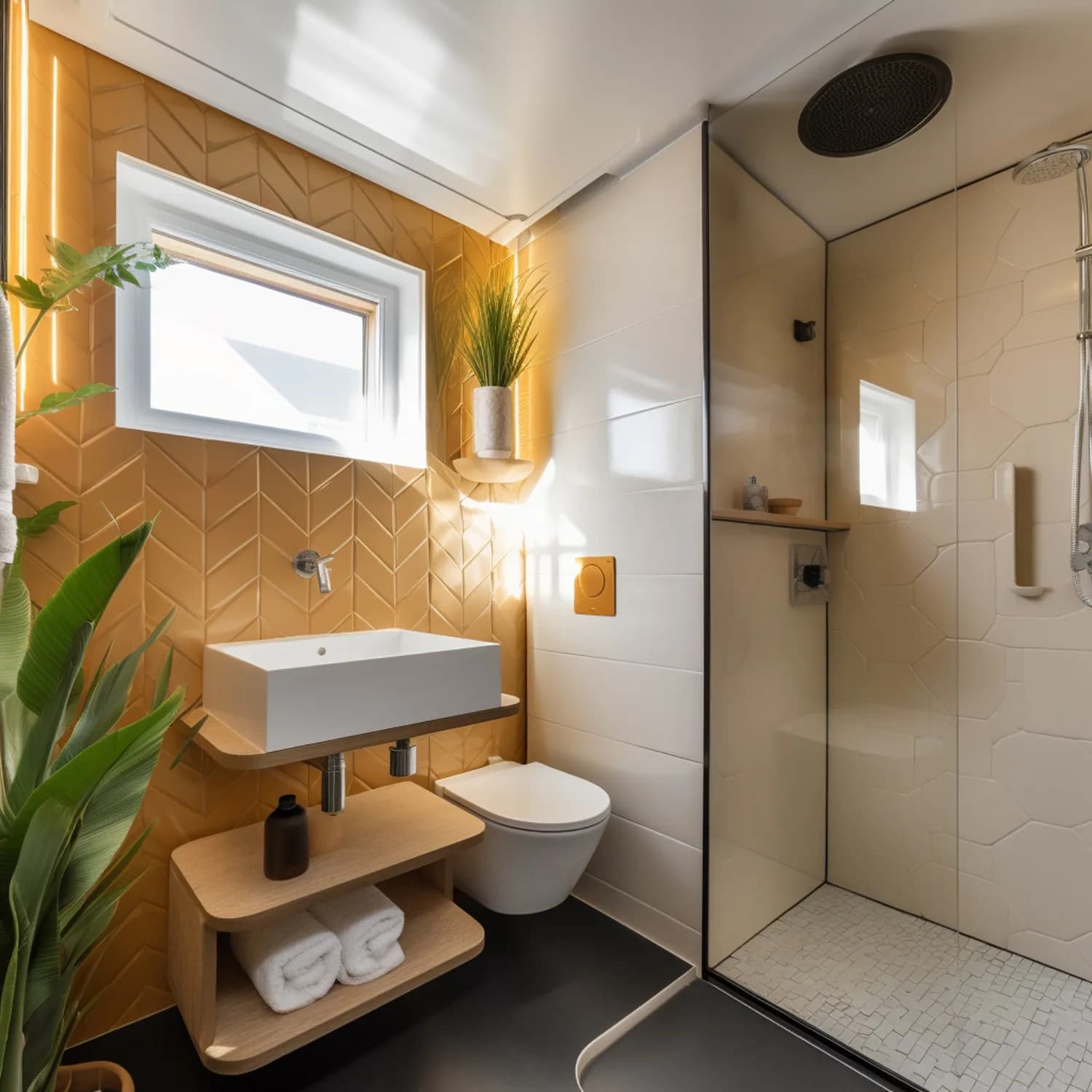
Bathroom Renovation
A full refit with new waterproofing, plumbing and finishes — the most leak-prone room in the house.
Pay in instalments with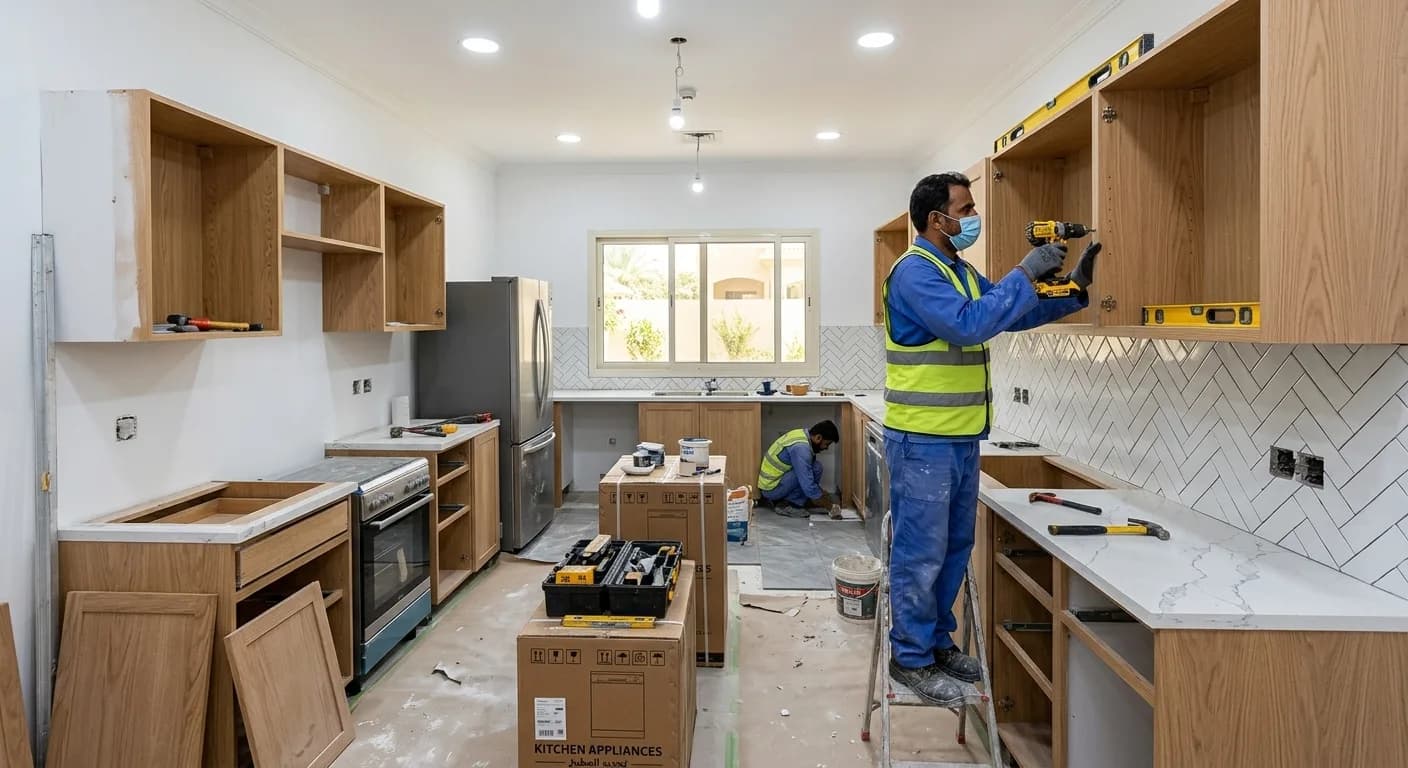
Kitchen Renovation
A kitchen refit with new cabinetry, worktops and revised services.
Pay in instalments withReady to start your project?
A free site visit anywhere in the UAE within 48 hours — no obligation.