
Landscape Lighting
Lighting that makes the garden usable after dark — which is when it actually gets used here.
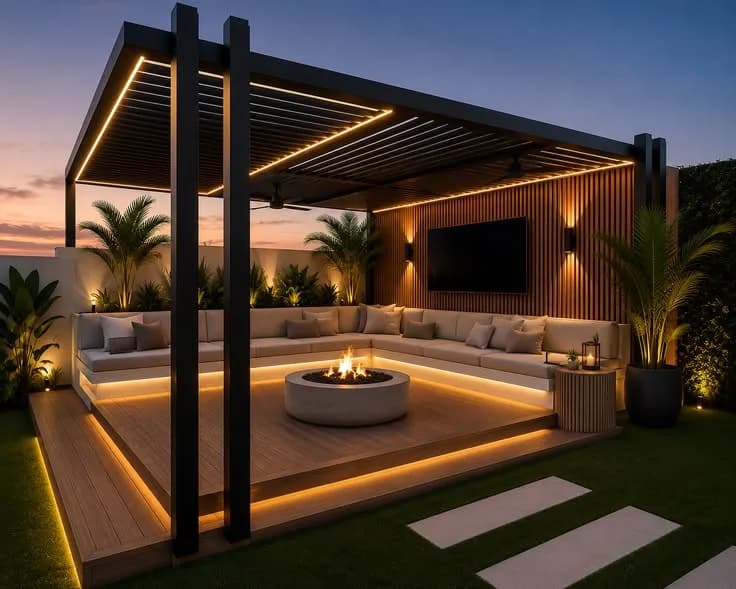
A garden here is used at night far more than during the day, so lighting is not decoration. We work in three layers: path lighting for safety, uplighting on trees and features, and warm lighting over seating for use. All fittings are IP65 or better, and low-voltage wherever that is the right call.
Gardens here are used at night — lighting is what makes that possible
In the UAE most outdoor use starts after sunset. That makes lighting not a finishing touch but the thing that decides whether the space is usable at the hours it is actually needed. A garden with significant spend and no designed lighting gets used in daytime, in winter only.
Four different jobs, not one product
- Path lighting — movement safety. Low fittings that light the ground, not the eye.
- Accent — a tree, wall or water feature. Adds depth to the night view and makes the garden read larger.
- Seating light — warm and indirect, allowing conversation and dining without glare.
- Security — entrances and dark corners, usually on motion sensing rather than running all night.
Confusing these produces the result we see often: harsh floodlights that dazzle while the rest of the garden stays black.
Glare is the enemy
A fitting whose source is visible to the eye destroys the view of everything else — the eye adapts to the bright point. Good lighting hides the source and shows the lit surface: light washing a wall, falling from above onto a path, or grazing up through a tree.
Sequence with the rest of the work
Cabling goes in before planting and paving. Installing it later means trenching through plants or breaking up tiles. If the project is phased, run empty conduit in phase one even if the lighting itself is deferred — empty conduit is far cheaper than excavating twice.
Control
A timer is the simplest answer and prevents the biggest cost factor: unnecessary running hours. A photocell switches on at dusk automatically and shifts with the seasons by itself. App control helps where you want scenes — entertaining light versus everyday light.
Scope of work
- Lighting laid out by use: paths, accent, seating, security
- Fittings with an IP rating suited to water, dust and coastal humidity
- 12V low voltage in planting and pool zones for higher safety
- One consistent warm colour temperature — mixing ruins the night view
- Cabling in protective conduit underground, not buried bare
- Control by timer, photocell or app as required
How we deliver
Layout on the drawing
Every point defined with a purpose: path safety, tree accent, or seating light. A point without a purpose creates glare, not light.
Cable installation
Protective conduit buried at adequate depth, with a distribution board and low-voltage transformer. Cabling precedes planting and paving.
Fitting and aiming
Fittings installed and beam angles set at night — aiming in daylight is guesswork, and the difference shows on the first evening.
Programming and handover
Timer or photocell set, with a walkthrough of adjusting times between summer and winter.
Frequently asked
Why low voltage in the garden?
Which IP rating do I need?
How much power does it use?
Why one colour temperature?
Can lighting be added to an existing garden?
Does coastal humidity affect fittings?
In the same category
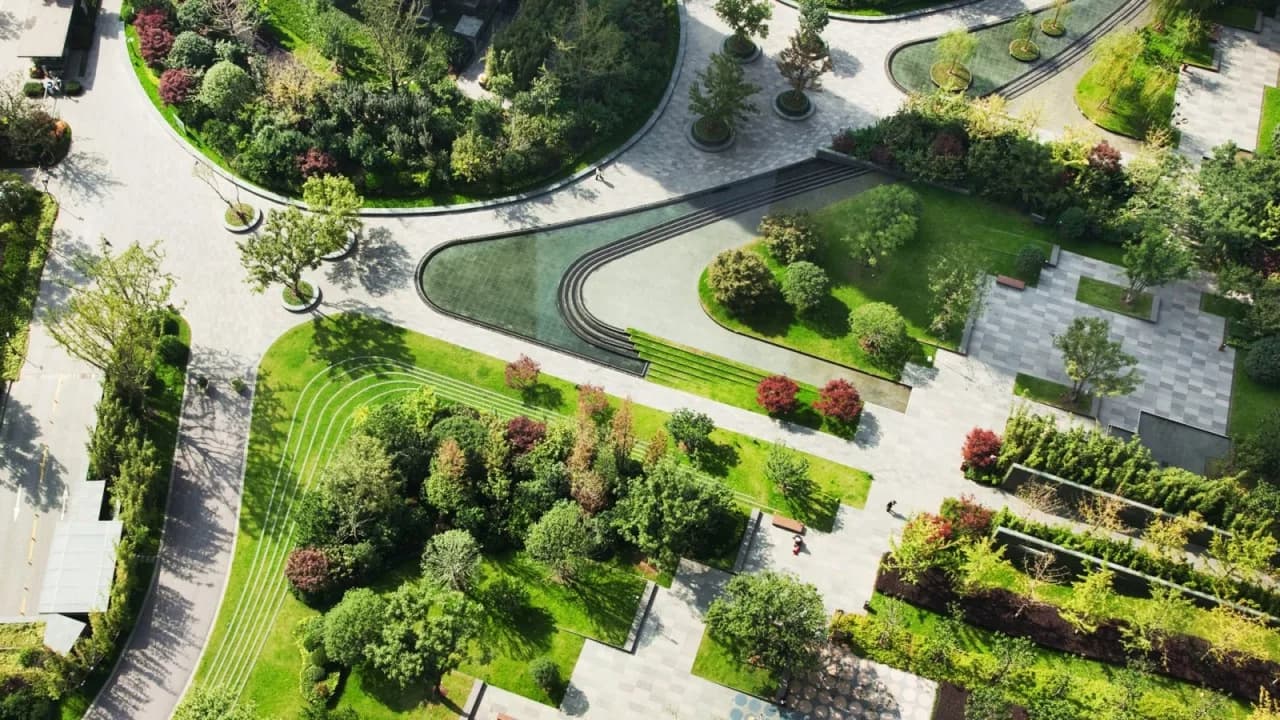
Softscape & Planting
Trees, palms and shrubs chosen to survive UAE heat and saline water — not just to look good on delivery.
Pay in instalments with

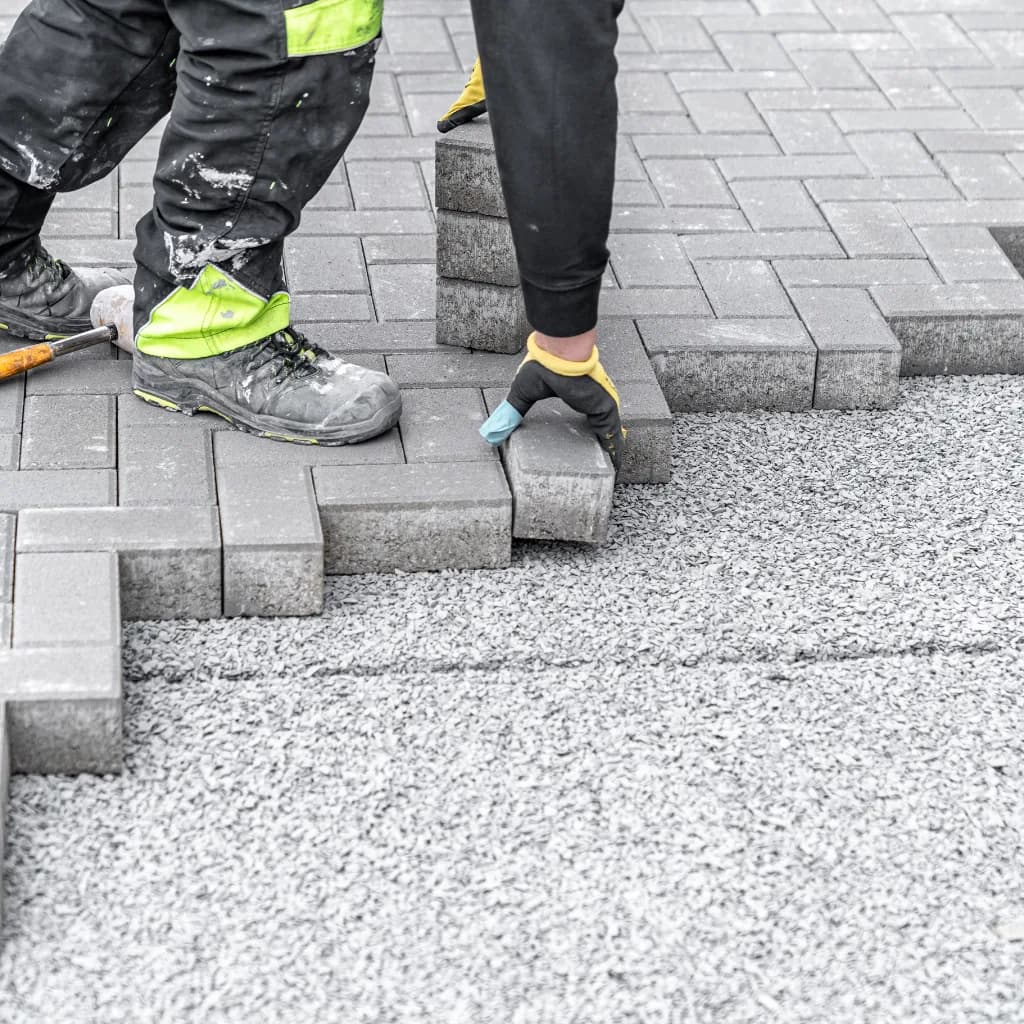
Hardscaping
Interlock, paving, pathways, decking and retaining walls — the structure the garden is built on.
Pay in instalments with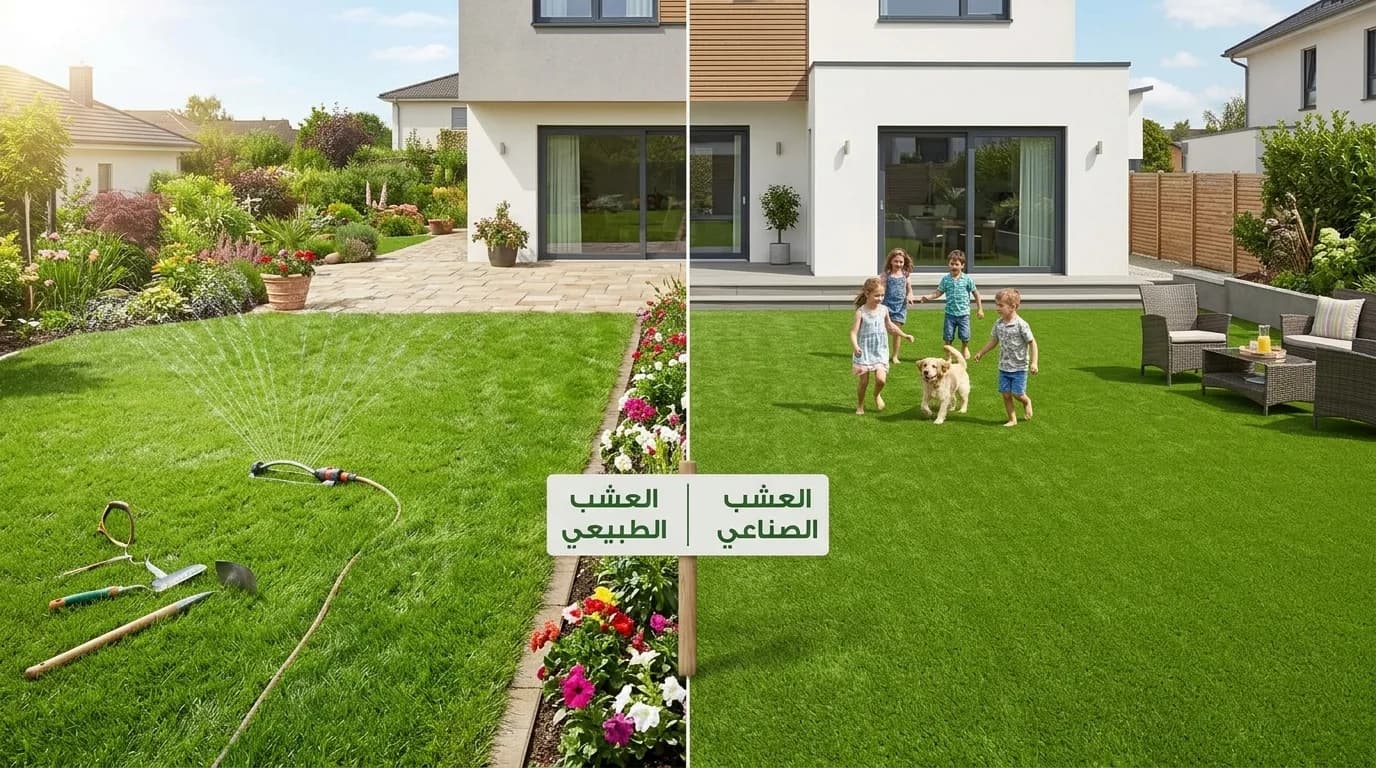
Natural & Artificial Turf
Natural turf in varieties that survive summer, or artificial grass at a spec that actually differs from what the market sells.
Pay in instalments withReady to start your project?
A free site visit anywhere in the UAE within 48 hours — no obligation.