
Skylights & Glass Domes
Rooflights with thermal glazing and proper drainage — daylight without the heat.
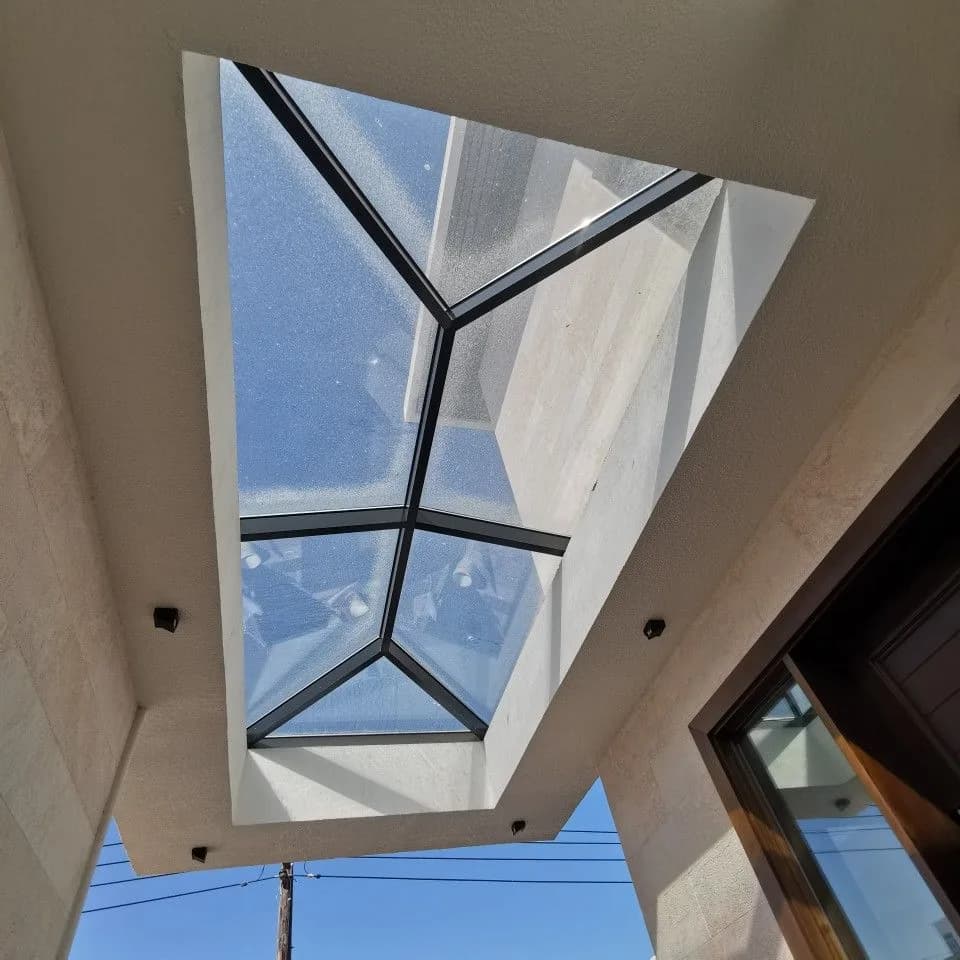
Skylights solve the lighting problem in deep interior spaces, but an uninsulated one becomes a heat source and a leak. We use double glazing with a reflective coating, a thermally broken frame, and a perimeter condensation channel — condensation is a real issue in this humidity, and most leaks come from it rather than from rain.
Daylight from above changes the space
Light entering from the roof distributes itself completely differently from window light. A window lights the area near it and leaves the depth of the room dark; a skylight lights the middle from above. That makes it the natural answer for spaces without an external wall: stairwells, internal corridors, internal bathrooms and light wells.
Thermal load is the trade-off
An opening that admits light admits radiant heat with it. In the UAE climate that is not a detail — a large single-glazed skylight turns the space beneath it into the hottest room in the house.
The answer is not shrinking the opening until the benefit disappears; it is specification: reflective double glazing that rejects much of the radiant heat while passing visible light. Size is then set by how much light is actually needed.
The leak point is known in advance
When a skylight leaks, in nine cases out of ten the problem is neither the glass nor the frame — it is the junction with the roof. That detail needs multi-layer sealing in the correct order, so water passing one layer drains away rather than continuing inwards.
A water test before handover reveals this. The test is not a formality — it is the only way to be sure before the first rainfall.
Condensation is a separate problem
Even without a leak, the difference between the inner glass surface temperature and room air produces condensation. A correct frame has channels that collect and drain those droplets outside. A frame without a thermal break heats and cools faster and increases condensation — so both problems trace to the same specification.
Safety overhead
Any roof glazing above an area where people move must be toughened or laminated. Laminated in particular holds together on its interlayer even when broken, so it does not fall on those below. That is a safety specification, not an upgrade.
Pitch and dust
Dust accumulates quickly on any horizontal surface here, and a perfectly flat skylight is coated within weeks, cutting the light it admits. Pitch lets dust move off with wind and water; a dome does this naturally — a practical reason for choosing one, not an aesthetic one.
Scope of work
- Toughened double glazing with a reflective coating — daylight without the full heat load
- Thermally broken frame with condensation drainage channels
- Adequate pitch so water and dust do not settle on the surface
- Toughened or laminated safety glass above circulation areas
- Optional opening vents to release hot air that collects at high level
- Sealed detailing where the skylight meets the roof
How we deliver
Position and size
Where daylight is genuinely needed, at a size that admits enough light without excess heat load. Bigger is not always better.
Roof opening and preparation
Cut the roof opening and build a structural perimeter frame, allowing for existing slab reinforcement.
Installation and sealing
Fit frame and glazing, and seal the roof junction in layers — the most common leak point.
Finishing and testing
Interior finishing around the opening, and a water test before handover.
Frequently asked
Do skylights heat the room?
Do they leak in rain?
Does condensation collect underneath?
Does the glass break?
Can a skylight go into an existing roof?
Dome or flat?
In the same category
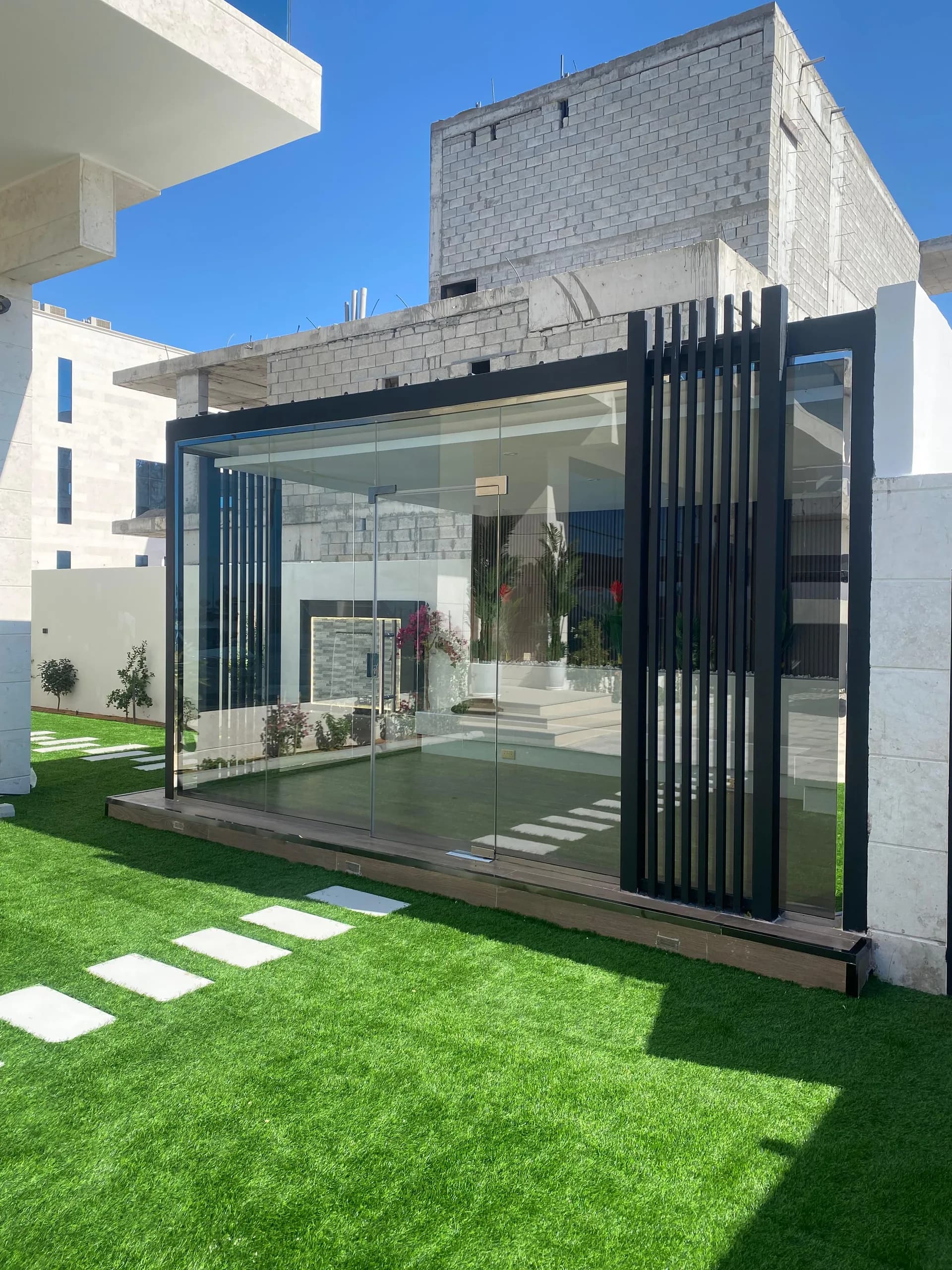
Glass Rooms
An insulated, air-conditioned glass room that adds space to the villa without a concrete structure.
Pay in instalments with

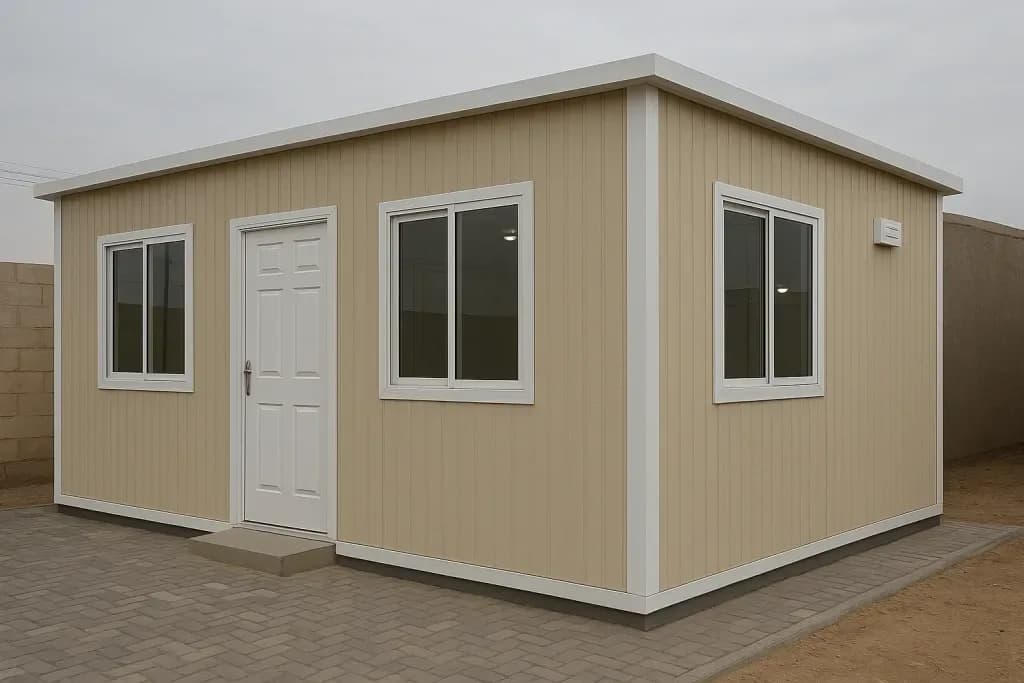
Sandwich Panel Annexes
Rooms and annexes in insulated panel — fast to build, with better thermal performance than blockwork.
Pay in instalments with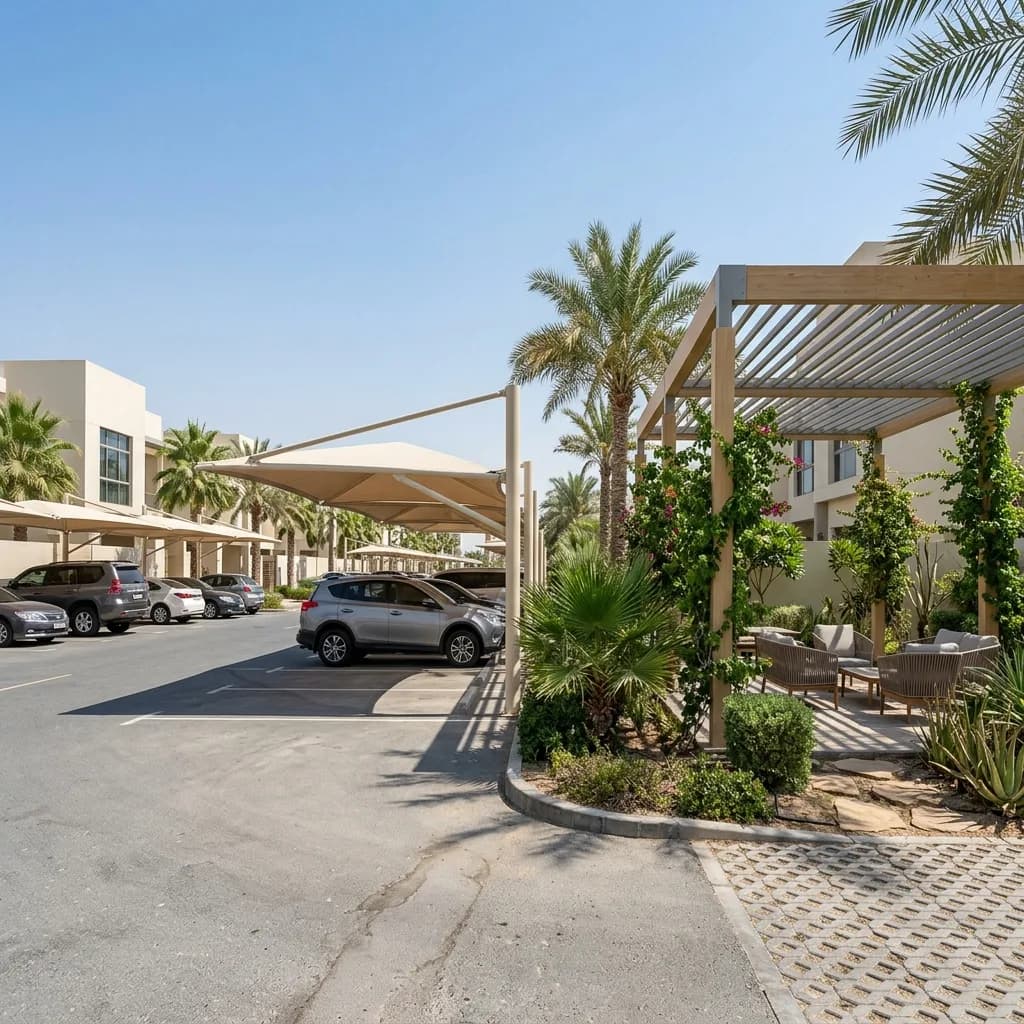
Shades & Car Parking Canopies
Fabric or polycarbonate canopies for cars, seating and pools, on a corrosion-resistant frame.
Pay in instalments withReady to start your project?
A free site visit anywhere in the UAE within 48 hours — no obligation.